
Dernière mise à jour le 11 juin 2024 par Machines à biscuits
Soft biscuits, also known as cookies in some regions, are a type of biscuit characterized by their tender, chewy texture. Unlike their crunchy counterparts, soft biscuits are often moist and may have a slightly cake-like consistency.
Here are some reasons why they are loved by customers:
1. Texture:
- Détail: The soft, chewy texture of these biscuits is a delightful contrast to the typical crunch of traditional biscuits. This texture is often achieved through the use of ingredients like brown sugar, which retains moisture, and underbaking to a certain extent.
- Exemple: Soft chocolate chip cookies are a classic example, with their gooey, melt-in-your-mouth texture that many people find irresistible.
2. Saveur:
- Détail: Soft biscuits often have a rich, buttery flavor that is enhanced by their moist texture. They can also be infused with a variety of flavors, such as vanilla, chocolate, or spices, which are well-preserved in the soft texture.
- Exemple: Soft ginger molasses cookies are loved for their deep, warm flavors that are perfectly complemented by their soft texture.
3. Polyvalence:
- Détail: Soft biscuits can be enjoyed in many ways – they can be plain, filled with cream or jam, or studded with chocolate chips, nuts, or dried fruits.
- Exemple: Soft oatmeal raisin cookies are a versatile treat, packed with chewy raisins and hearty oats for a satisfying snack.
4. Nourriture de confort:
- Détail: The soft and chewy texture of these biscuits often makes them feel like comfort food, providing a sense of warmth and nostalgia for many people.
- Exemple: A soft, warm chocolate chip cookie straight from the oven can evoke fond memories and provide a comforting experience.
5. Accords avec les boissons :
- Détail: Soft biscuits pair exceptionally well with beverages like milk, tea, or coffee, as they can soak up the liquid without falling apart too quickly.
- Exemple: Dunking a soft peanut butter cookie in a glass of cold milk is a beloved snack for many.
Soft biscuits are loved by customers for their indulgent texture, rich flavors, and the comforting experience they provide. Their versatility and ability to pair well with a variety of beverages make them a popular choice for any occasion.
Comment produire en masse Soft biscuits?
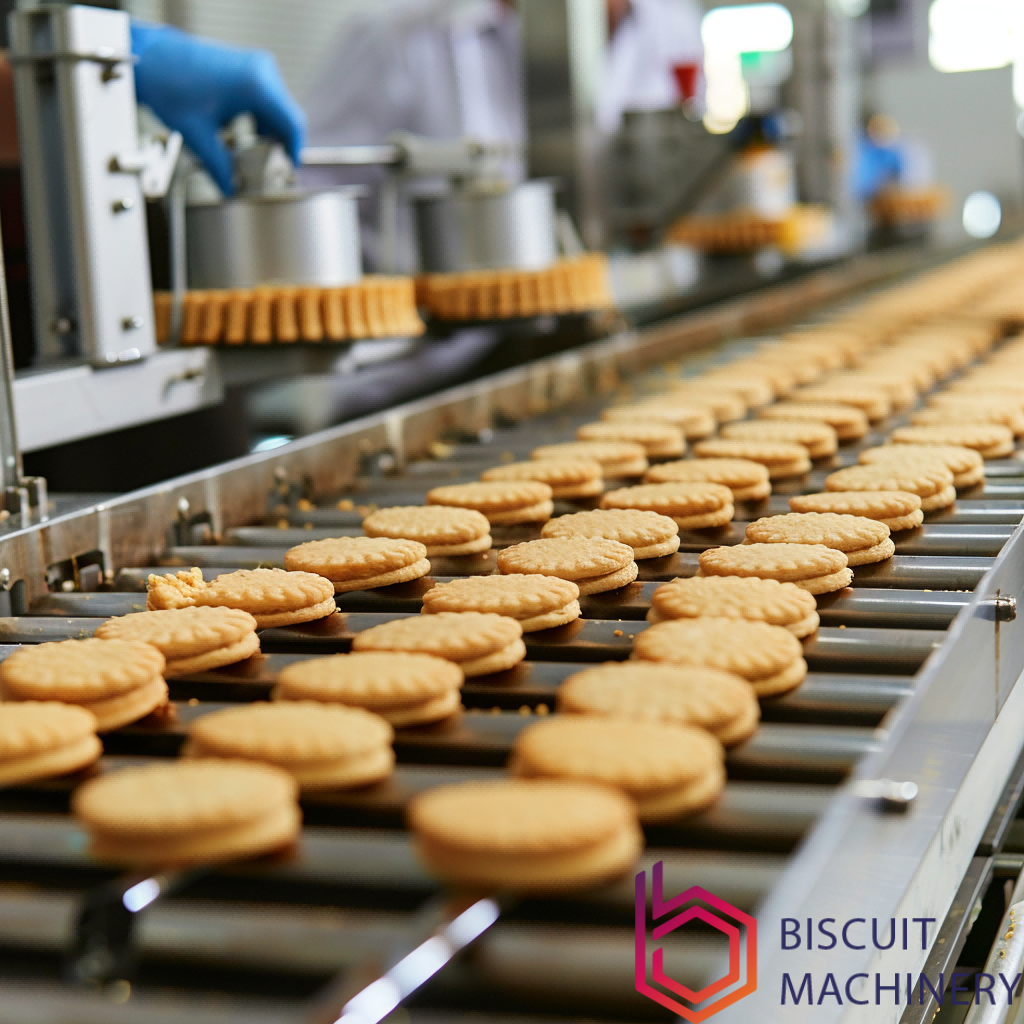
Mass-producing soft biscuits involves a series of steps to ensure consistent quality and efficiency. Here’s an overview of the process:
1. Approvisionnement et préparation des ingrédients :
- Détail: Source high-quality ingredients like flour, sugar, butter, eggs, and any additional flavorings or add-ins. Prepare the ingredients according to the recipe specifications.
- Exemple: Mélangez les ingrédients secs, y compris la farine et la levure chimique, en grandes quantités pour assurer la cohérence entre les lots.
2. Mélange de pâte :
- Détail: Use industrial mixers to combine the ingredients into a uniform dough. The mixing process is crucial for achieving the desired soft texture.
- Exemple: Cream the butter and sugar before gradually adding the eggs and dry mixture to form a cohesive dough.
3. Portionnage et façonnage :
- Détail: Use automated portioning equipment, such as dough depositors, to ensure that each biscuit is uniform in size and shape.
- Exemple: Réglez le déposeur de pâte pour distribuer des boules de pâte de la taille souhaitée sur des bandes transporteuses ou des plaques de cuisson.
4. Pâtisserie:
- Détail: Bake the biscuits in industrial ovens that can accommodate large quantities. The baking time and temperature are critical for achieving the soft texture.
- Exemple: Use tunnel ovens or rack ovens with precise temperature and time controls to bake the biscuits until they are just set and retain their softness.
5. Refroidissement:
- Détail: Allow the biscuits to cool on conveyor belts or cooling racks to prevent them from becoming too hard or dry.
- Exemple: Faites passer les biscuits dans un tunnel de refroidissement pour garantir un refroidissement uniforme avant l'emballage.
6. Contrôle de qualité:
- Détail: Effectuer des contrôles de qualité pour garantir que les biscuits répondent aux normes requises en termes de taille, de texture et de goût.
- Exemple: Utilisez des systèmes de vision automatisés pour détecter tout défaut ou incohérence dans les biscuits.
7. Emballage:
- Détail: Pack the biscuits into airtight wrappers or containers to maintain their freshness and softness.
- Exemple: Use flow wrap machines or packaging lines to seal the biscuits in protective packaging that keeps them soft.
By following these steps and using the appropriate equipment, manufacturers can mass-produce soft biscuits efficiently while maintaining the quality and consistency that customers expect.
Quoi sont Soft biscuits fait à partir de?
Soft biscuits, also known as soft cookies in some regions, are made from a combination of ingredients that contribute to their tender and chewy texture. Here’s a basic list of ingredients commonly used in soft biscuit recipes:
1. Farine:
- Fonction: Provides the structure for the biscuits. All-purpose flour is most commonly used, but some recipes may use cake flour or a mix of flours for a softer texture.
2. Sucre:
- Fonction: Adds sweetness and contributes to the texture. Brown sugar is often used in higher quantities than white sugar to create a moist, chewy texture.
3. Beurre ou Margarine :
- Fonction: Adds richness and flavor, and helps create the soft texture of the biscuits. Butter is typically used for its flavor, but margarine can be used as a substitute.
4. Œufs:
- Fonction: Bind the ingredients together, add moisture, and contribute to the rise of the biscuits.
5. Agents levants :
- Fonction: Baking soda or baking powder is used to help the biscuits rise and become slightly airy.
6. Extrait de vanille:
- Fonction: Enhances the flavor of the biscuits. A small amount of vanilla extract is often added for depth of flavor.
7. Sel:
- Fonction: Équilibre la douceur et rehausse la saveur générale des biscuits.
Ingrédients facultatifs :
- Pépites ou morceaux de chocolat : For chocolate chip soft biscuits.
- Noix: Comme des noix ou des pacanes pour plus de texture et de saveur.
- Épices: Comme de la cannelle ou de la muscade pour plus de saveur.
- Dried Fruits: Such as raisins or cranberries for sweetness and chewiness.
These ingredients are combined to form a dough, which is then portioned into individual biscuits and baked. The result is a delicious treat with a soft, chewy texture that is often preferred by those who enjoy a more tender bite in their biscuits.

Quelles sont les principales caractéristiquess de the Soft biscuit ligne de production?
A soft biscuit production line is designed to efficiently manufacture soft, chewy biscuits on a large scale. The main features of a typical production line include:
1. Équipement de mélange de pâte :
- Fonction: Combines flour, sugar, butter, eggs, and other ingredients to form a consistent dough.
- Exemple: High-capacity industrial mixers that can handle large batches of dough while ensuring even mixing of all ingredients.
2. Dough Portioning Machines:
- Fonction: Divides the dough into individual portions, ensuring uniform size and weight for each biscuit.
- Exemple: Dough depositors or extruders that accurately dispense the dough onto conveyor belts or baking trays.
3. Fours de cuisson :
- Fonction: Bakes the portioned dough to transform it into soft biscuits. The baking process is carefully controlled to achieve the desired texture.
- Exemple: Tunnel ovens or conveyor ovens that provide consistent heat and can bake large quantities of biscuits simultaneously.
4. Convoyeurs de refroidissement :
- Fonction: Allows the baked biscuits to cool down to the appropriate temperature before packaging.
- Exemple: Cooling tunnels or conveyors that ensure even cooling of the biscuits to prevent them from becoming too brittle or soft.
5. Systèmes de contrôle de qualité :
- Fonction: Monitors the production process and checks the quality of the biscuits at various stages.
- Exemple: Metal detectors, weight checkers, and visual inspection systems to ensure that the biscuits meet the required standards.
6. Équipement d'emballage :
- Fonction: Packs the cooled biscuits into wrappers or boxes for distribution.
- Exemple: Flow wrappers or cartoning machines that package the biscuits in airtight packaging to maintain their softness and freshness.
7. Systèmes de transport :
- Fonction: Transports the dough, biscuits, and packaged products throughout the production line.
- Exemple: Various types of conveyors, such as belt conveyors and bucket elevators, to move ingredients, dough, and finished products efficiently.
Fonctionnalités supplémentaires :
- Systèmes d'automatisation et de contrôle : De nombreuses lignes de production sont équipées de systèmes d’automatisation avancés pour un contrôle et une surveillance précis du processus de production.
- Assainissement et nettoyage : Une conception hygiénique et des fonctionnalités faciles à nettoyer sont essentielles pour que les lignes de production alimentaire répondent aux normes de sécurité alimentaire.
A well-designed soft biscuit production line integrates these features to streamline the manufacturing process, ensuring high productivity, consistent product quality, and minimal waste.

Quel type de Soft biscuit sera populaire en 2024 ?
Predicting the specific trends for soft biscuits in 2024 can be challenging, but based on current consumer preferences and emerging trends, we can anticipate some potential directions:
1. Variations soucieuses de la santé :
- S'orienter: As consumers become more health-conscious, there may be an increased demand for soft biscuits made with healthier ingredients, such as whole grains, alternative sweeteners, or functional additives like fiber and protein.
- Exemple: Soft biscuits made with oat flour, sweetened with agave nectar, and enhanced with added protein or fiber.
2. Options à base de plantes et végétaliennes :
- S'orienter: The growing popularity of plant-based diets is likely to continue, leading to a demand for vegan soft biscuits made without animal products.
- Exemple: Vegan soft biscuits made with plant-based butter, almond milk, and egg substitutes like flaxseed meal or aquafaba.
3. Saveurs mondiales :
- S'orienter: As consumers become more adventurous with their food choices, soft biscuits with flavors inspired by global cuisines may become more popular.
- Exemple: Soft biscuits infused with matcha, chai spices, or tropical fruit flavors like passionfruit or mango.
4. Ingrédients fonctionnels :
- S'orienter: Functional foods that offer additional health benefits are becoming more popular, extending to the biscuit category.
- Exemple: Soft biscuits with added probiotics, collagen, or adaptogens like ashwagandha for added health benefits.
5. Gourmet and Premium Varieties:
- S'orienter: Consumers are willing to pay a premium for high-quality, artisanal products, leading to the development of gourmet soft biscuit varieties.
- Exemple: Soft biscuits made with premium ingredients like single-origin chocolate, artisanal cheeses, or hand-crafted jams.
6. Axé sur la durabilité :
- S'orienter: There is a growing emphasis on sustainability, which may influence ingredient sourcing and packaging for soft biscuits.
- Exemple: Soft biscuits made with sustainably sourced ingredients and packaged in eco-friendly, compostable packaging.
7. Snack-Sized and Portion-Controlled:
- S'orienter: The trend towards smaller, portion-controlled snacks continues, catering to health-conscious consumers and those seeking convenience.
- Exemple: Individually wrapped mini soft biscuits that are perfect for on-the-go snacking or portion control.
By staying attuned to these trends and consumer preferences, biscuit manufacturers can innovate and develop soft biscuit varieties that are likely to be popular in 2024 and beyond.

Comment trouver des entreprises qui souhaitent commander Soft biscuits en masse?
Finding companies that would like to order soft biscuits in bulk requires a combination of research, networking, and marketing efforts. Here are some strategies to help you identify potential bulk buyers:
1. Marchés potentiels de recherche :
- Détail: Identify industries and sectors where bulk orders of soft biscuits are common, such as hospitality (hotels, restaurants, cafes), corporate (offices, events, meetings), retail (grocery stores, specialty food shops), and education (schools, universities).
- Exemple: Look for local hotels that might be interested in offering your soft biscuits as part of their afternoon tea service or in guest welcome packages.
2. Attend Trade Shows and Industry Events:
- Détail: Participate in food industry trade shows, expos, and networking events where you can showcase your biscuits and connect with potential buyers.
- Exemple: Set up a booth at a regional food expo and offer samples of your soft biscuits to attendees, including buyers from grocery stores and cafes.
3. Utilisez les marchés en ligne et les plateformes B2B :
- Détail: Répertoriez vos produits sur les marchés en ligne et les plateformes B2B destinées aux acheteurs grossistes et aux professionnels de l'industrie agroalimentaire.
- Exemple: Create a seller profile on platforms like Alibaba, ThomasNet, or RangeMe to reach a wider audience of potential bulk buyers.
4. Tirez parti des médias sociaux et du marketing en ligne :
- Détail: Use social media platforms and online advertising to showcase your soft biscuits and reach out to businesses that might be interested in bulk orders.
- Exemple: Run targeted ads on LinkedIn or Facebook aimed at decision-makers in the hospitality and corporate sectors.
5. Proposer des options de personnalisation et de personnalisation de marque :
- Détail: Attract corporate clients by offering customization options, such as branded packaging or biscuits with company logos.
- Exemple: Promote your ability to create custom-branded soft biscuits for corporate events or promotional gifts.
6. Créer un site Web professionnel :
- Détail: Créez un site Web professionnel qui présente vos produits, met en valeur vos capacités de commande groupée et fournit des informations de contact faciles pour les demandes de renseignements.
- Exemple: Incluez une page dédiée « Vente en gros » ou « Commandes en gros » sur votre site Web avec des informations sur les prix, les quantités minimales de commande et les options de personnalisation.
7. Réseau local :
- Détail: Établissez des liens avec des entreprises et des organisations locales qui pourraient être intéressées par la commande de biscuits en gros pour des événements ou un approvisionnement régulier.
- Exemple: Assistez aux réunions de la chambre de commerce locale ou à des groupes de réseautage d'affaires pour présenter vos produits à d'autres propriétaires d'entreprise.
8. Recherchez des références et des témoignages :
- Détail: Encouragez les clients satisfaits à vous recommander d’autres entreprises susceptibles d’être intéressées par des commandes groupées. Recueillez des témoignages pour renforcer votre crédibilité.
- Exemple: Ask a cafe that regularly orders your soft biscuits in bulk to provide a testimonial for your website or marketing materials.
By employing these strategies, you can identify and reach out to companies that are likely to be interested in ordering your soft biscuits in bulk, ultimately expanding your customer base and increasing sales.

Quelle est la différence de goût de Soft biscuits sur différents marchés à l’échelle mondiale ?
The taste of soft biscuits can vary in different global markets due to regional preferences, cultural influences, and variations in ingredients. Here’s how the taste of soft biscuits might differ across various regions:
1. Amérique du Nord:
- Profil gustatif : Soft biscuits in North America, often referred to as cookies, tend to be sweet and rich, with a focus on flavors like chocolate chip, peanut butter, and oatmeal raisin.
- Exemple: Soft chocolate chip cookies in the US are known for their sweet, buttery flavor with a chewy texture.
2. L'Europe :
- Profil gustatif : European soft biscuits might be less sweet than their American counterparts and often incorporate unique local flavors such as speculoos (spiced shortcrust biscuit) in Belgium or lemon and almond in Italy.
- Exemple: Soft amaretti biscuits in Italy have a sweet almond flavor with a chewy, marzipan-like texture.
3. Asie:
- Profil gustatif : In Asian markets, soft biscuits might feature regional flavors like matcha, red bean, or sesame, and can be less sweet compared to Western varieties.
- Exemple: Matcha-flavored soft biscuits in Japan offer a unique combination of sweet and slightly bitter flavors with a tender texture.
4. Moyen-Orient:
- Profil gustatif : Soft biscuits in the Middle East often incorporate regional ingredients such as dates, nuts, and spices like cardamom or rose water, resulting in a rich and aromatic flavor profile.
- Exemple: Ma’amoul are soft, shortbread-like biscuits filled with dates or nuts, commonly flavored with rose water or orange blossom water.
5. L'Amérique latine:
- Profil gustatif : In Latin American countries, soft biscuits might feature local flavors like dulce de leche, coconut, or tropical fruits, with a balance of sweetness and richness.
- Exemple: Alfajores are soft, sandwich biscuits filled with dulce de leche and often coated in chocolate or dusted with powdered sugar.
6. Afrique:
- Profil gustatif : Soft biscuits in African markets might include regional flavors such as coconut, ginger, or citrus, with varying levels of sweetness depending on the region.
- Exemple: Soft ginger biscuits in South Africa are known for their spicy and sweet flavor with a chewy texture.
These regional variations reflect the diversity of tastes and ingredients around the world. Global brands often adapt their recipes to cater to local preferences, while local bakeries might offer unique takes on the classic soft biscuit.

What are the advantages of a Soft biscuit ligne de production?
A soft biscuit production line offers several advantages for large-scale manufacturing, including:
1. Efficacité et productivité :
- Advantage: Automated production lines significantly increase the speed of biscuit production, allowing for the rapid and consistent output of large quantities of soft biscuits.
- Exemple: An automated dough depositor can portion thousands of uniform dough pieces per hour, far surpassing manual methods.
2. Consistency and Uniformity:
- Advantage: The use of precision machinery ensures that each biscuit is uniform in size, shape, and texture, contributing to a consistent product quality.
- Exemple: A wire-cut machine can precisely portion dough with embedded ingredients like chocolate chips, ensuring each biscuit has a similar distribution.
3. Rentabilité :
- Advantage: Automation reduces labor costs and increases production efficiency, leading to lower production costs per unit.
- Exemple: Reduced need for manual labor in tasks such as dough portioning and biscuit forming lowers overall production costs.
4. Évolutivité :
- Advantage: Production lines can be scaled up or down to meet demand fluctuations, providing flexibility in production volume.
- Exemple: Additional modules or shifts can be added to increase output during peak demand periods, such as holidays.
5. Contrôle de qualité:
- Advantage: Integrated quality control systems can monitor and adjust parameters to ensure consistent product quality.
- Exemple: Optical sensors can detect and reject biscuits that do not meet specified size or texture criteria.
6. Hygiène et sécurité :
- Advantage: Production lines designed with hygiene in mind reduce the risk of contamination, ensuring a safe product.
- Exemple: Stainless steel equipment and easy-to-clean designs minimize the risk of foodborne pathogens.
7. Innovation and Flexibility:
- Advantage: Production lines can be adapted to incorporate new recipes, ingredients, or packaging innovations.
- Exemple: Modular designs allow for the introduction of new equipment for filling or decorating biscuits with seasonal or trending flavors.
8. Data Collection and Analysis:
- Advantage: Modern production lines can collect data on various aspects of production, allowing for continuous improvement and optimization.
- Exemple: Real-time data on baking temperatures and times can be analyzed to optimize energy usage and product quality.
By leveraging these advantages, manufacturers can produce soft biscuits more efficiently and effectively, meeting consumer demand while maintaining high standards of quality and safety.

How to Start A Successful Soft Biscuit Business?
Starting a successful soft biscuit business requires careful planning, understanding your market, and delivering a quality product. Here are some key steps to help you get started:
1. Étude de marché:
- Détail: Research the market to understand consumer preferences, identify competitors, and find potential niches. Determine if there’s demand for certain types of soft biscuits, such as gluten-free, vegan, or gourmet options.
- Exemple: Conduct surveys or focus groups to gather feedback on different biscuit recipes and packaging options.
2. Plan d'affaires :
- Détail: Develop a comprehensive business plan that outlines your business goals, target market, marketing strategy, production plan, and financial projections.
- Exemple: Create a business plan that includes a detailed budget for startup costs, such as equipment, ingredients, and packaging, as well as projected sales and expenses.
3. Développement de produits :
- Détail: Perfect your soft biscuit recipe to ensure it stands out in the market. Consistency in taste and quality is key to building a loyal customer base.
- Exemple: Experiment with different types of flour, sweeteners, and add-ins to find the best combination for your signature soft biscuits.
4. Licensing and Permits:
- Détail: Obtain the necessary licenses and permits to operate your business legally. This may include a food handler’s permit, business license, and health department permits.
- Exemple: Check with your local health department to understand the regulations for selling baked goods in your area and apply for the required permits.
5. Configuration de production :
- Détail: Set up a production area that meets health and safety standards. Decide whether you’ll produce the biscuits in a commercial kitchen, a home-based setup, or a retail bakery.
- Exemple: Invest in commercial-grade ovens, mixers, and baking trays to ensure efficient and consistent biscuit production.
6. Image de marque et emballage :
- Détail: Create a strong brand identity that resonates with your target market. Design attractive packaging that keeps your biscuits fresh and appeals to customers.
- Exemple: Develop a memorable brand name and logo, and use eco-friendly packaging with clear labeling that highlights your biscuits’ unique selling points.
7. Marketing et ventes:
- Détail: Develop a marketing strategy to promote your soft biscuits. Utilize online platforms, social media, local markets, and wholesale opportunities to reach your target audience.
- Exemple: Set up a website with an online store, create engaging social media content, offer samples at local events, and approach cafes or stores to stock your biscuits.
8. Customer Feedback and Improvement:
- Détail: Gather customer feedback to continuously improve your product and customer experience. Use feedback to make adjustments to your recipes, packaging, or marketing strategies.
- Exemple: Encourage customers to leave reviews on your website or social media pages and use their feedback to refine your biscuit offerings.
By following these steps and staying committed to quality and customer satisfaction, you can build a successful soft biscuit business that stands out in the market.

How to build a Soft biscuit brand?
Building a soft biscuit brand involves creating a unique identity, delivering a consistent product, and effectively marketing your brand to your target audience. Here are some key steps to help you build a successful soft biscuit brand:
1. Définissez votre identité de marque :
- Détail: Determine what makes your soft biscuits unique and what values you want your brand to represent. This could be a focus on natural ingredients, innovative flavors, or a commitment to sustainability.
- Exemple: Develop a brand story that highlights your use of organic, locally sourced ingredients and your dedication to eco-friendly packaging.
2. Create a Memorable Brand Name and Logo:
- Détail: Choose a brand name and design a logo that reflects your brand identity and is easily recognizable. Your logo should be visually appealing and look good on packaging, marketing materials, and online platforms.
- Exemple: Design a logo that features a stylized soft biscuit with your brand name in a complementary font.
3. Develop a Signature Recipe:
- Détail: Perfect your soft biscuit recipe to ensure it stands out in the market. Consistency in taste and quality is key to building a loyal customer base.
- Exemple: Experiment with different types of flour, sweeteners, and add-ins to find the best combination for your signature soft biscuits.
4. Concevoir un emballage attrayant :
- Détail: Create packaging that not only protects your biscuits but also aligns with your brand identity and appeals to your target audience. Consider including branding elements such as your logo, brand colors, and a brief brand story.
- Exemple: Use eco-friendly packaging with a clear window to showcase the softness of the biscuits, and include a label with your logo and a short description of what makes your biscuits special.
5. Establish an Online Presence:
- Détail: Create a professional website and engage with customers on social media platforms. Use these channels to share your brand story, showcase your products, and connect with your audience.
- Exemple: Regularly post mouth-watering photos of your soft biscuits on Instagram, share customer testimonials, and use hashtags to increase your brand’s visibility.
6. Market Your Brand:
- Détail: Develop a marketing strategy that includes online advertising, content marketing, influencer partnerships, and participation in local events or markets. Tailor your messaging to resonate with your target audience.
- Exemple: Collaborate with food bloggers or influencers to feature your soft biscuits in their content, and offer samples or discounts to new customers at local food festivals.
7. Build Customer Relationships:
- Détail: Provide excellent customer service and encourage feedback to foster a loyal customer base. Use email marketing or loyalty programs to keep customers engaged with your brand.
- Exemple: Set up an email newsletter with exclusive offers for subscribers and ask for customer reviews to feature on your website.
8. Monitor and Adapt:
- Détail: Regularly review your brand’s performance, customer feedback, and market trends. Be open to making adjustments to your products, branding, or marketing strategies to stay relevant and competitive.
- Exemple: If you notice a growing demand for gluten-free options, consider developing a gluten-free soft biscuit variant to cater to this market.
By following these steps and consistently delivering a high-quality product, you can build a strong and recognizable soft biscuit brand that resonates with customers and stands out in the market.




 Français
  English
  Русский
  Español de México
  العربية
  Português do Brasil
  日本語
日本語